
Devices Right Now

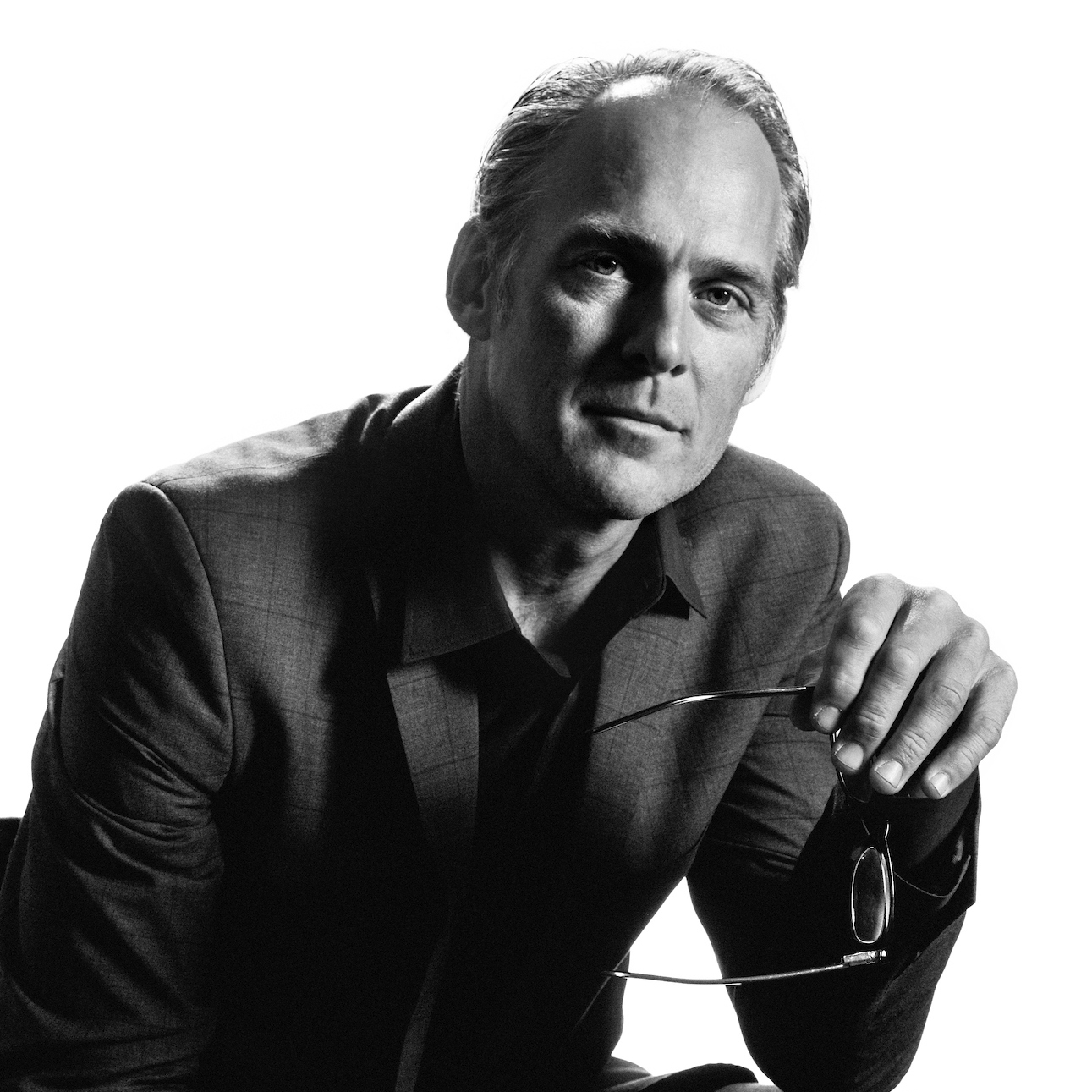
By: Steve Masur

Intro
Everyone wants to know which mobile device to get. As an entertainment and technology lawyer, I have to make it my business to know which platforms and which media apps people are predominantly using. So this year I took the journey through all the devices, and here’s what I found out.

Apple.
The period is intentional. I’m a Blackberry guy, but I needed apps. I tried everything, and I came back to Apple for some important reasons:

1) IOS. Thousands of developers have been working for many years, A-B testing, listening to feedback from users, looking at what competitors are doing, and systematically incorporating all of this into ONE rock solid operating system. Experimentation is limited to tweaking the very few things that remain broken, or incorporating new technologies on ONE hardware set, not experimenting on core applications I need to use every day, and trying to make them work passably on hundreds of different devices controlled by other companies, in other countries, speaking other languages, which are changing every day to address the fickle desires of markets around the world. Run-on sentence intentional.

2) A Strictly Controlled Hardware Platform. Thousands of developers have been working for many years, A-B testing, listening to feedback from users, looking at what competitors are doing, and systematically incorporating all of this into ONE rock solid set of devices. Experimentation is limited to tweaking the very few things that remain broken, or incorporating new technologies with ONE operating system, not experimenting on core functionalities on a device I need to use every day, and trying to make it work passably using a variety of different operating systems controlled by other companies, in other countries, speaking other languages, which are changing every day to address the fickle desires of markets around the world. Oh wait, did I repeat myself? So sorry.

3) Developers Love it. The basic device and operating system are standard. So now, a wide variety of developers can make a wide variety of different products for different purposes and be able to count on the hardware and software platform not being completely reinvented and leaving them in the dust. As a result, developers always seem to develop for IOS first, unless they actually work for Google or someone else, and even then I bet they develop for IOS first. What this means is that I will always get the latest things first, they will last longer, and they will always work better on this platform than any other. What’s not to love?

4) Giant Installed Base. Lots of people have iPhones. Over 100M have sold, and that was as of March 2011. So if you don’t like something about how your phone works, chances are about 100M other people also don’t like it, and are complaining directly to Apple. The same goes for all the apps you regularly use.

5) Interoperability. Apple lacked this for many years, but they finally fixed it. You can have an Apple phone, and a Windows or Linux PC, and life will be fine. You can write Word documents, and save pdfs on all Apple devices and send them to anyone, using any device and they can be read.

6) The Keyboard. “You’ll learn to love the keyboard.” No I won’t. I’m not going to lie. The screen-based keyboard sucks. I write messed up emails and texts every day, and it hurts my credibility, and it hurts my business. Other people write them to me, and I don’t know what they are trying to say.

So right now Apple wins. Period.

Android

In 2009, I wrote an article called “Android is Windows,” which said that Android would overtake Apple in worldwide adoption. It has. Furthermore, I said that all things remaining equal (which they never seem to do), Android would ultimately become the leading mobile device platform, achieving 70% or more of worldwide market share. It will. But there are some significant problems with Android for the daily business user. Battery life on most Android devices blows. You are transported back to the pre-Motorola StarTac days, when 3 hours was a long time and carrying an extra battery was a matter of necessity. Furthermore, most Android devices are buggy running applications you have to use every day, like the phone, text and email, especially where searching your contact database is involved. Also, these apps often don’t have obvious functionality you need, but have lots of other “cool” functionality you don’t need. This is because Android developers have re-invented the wheel from scratch with these commonly used applications. So in many cases, the wheel came out in the image of the particular development team’s artistic or idiosyncratic idea of what was needed, as opposed to most user’s idea. As a result, the wheel came out square, or sometimes cubist, expressionist, or abstract. So when deciding to buy an Android device, you have to do weeks of testing to decide whether you like the Samsung, HTC, Motorola, Huawei, or whatever flavor of Android. And what this means for most business users who lack the luxury of time and depend upon their phone every day to do real business, as opposed to listening to Google Music, tweeting or Facebooking their friends, is a plain old hexagon-shaped stop sign.

Robots will some day take over the earth. Android will someday take over the mobile device market. But I am living today, and I have to get things done and don’t want to spend my life tinkering under the hood, or looking for a wall jack. So I didn’t choose Android.

Blackberry
I love Blackberrys. I love RIM. I love the people at RIM, and I love Canadians. Blackberry remains hands down the best email and text device on the market, period. Blackberrys also do a few other things well, for example, the stock music player that comes with the phone, and its shuffle function are magic. Also, the devices are still bulletproof, reliable, have great battery life and all the other things you need for business. They also have expandable memory, they use ubiquitous connection modalities (USB, micro USB, Bluetooth, etc.), and you can replace the battery. But Blackberry is playing a losing game in the apps and internet browsing space, and unless RIM pulls some BIG MOVES FAST, this is going to kill the device off in the worldwide consumer market. I could write a book on what I think these big moves are, but that is not the point of this article, so I will just mention three off-the-page ideas: 1) license the email functionality to other device manufacturers, or OS developers, 2) focus on the ladies, because they seem to love that keyboard, and 3) go back to core values and re-solidify hegemony in the corporate mobile device market worldwide, using reliability, security and durability as your big sales points. These are games RIM can win. ….a locked down iPhone or Android Phone that doesn’t allow you to download “unapproved” apps? Come on, who really wants that? Take a page from Steve Jobs’ book, and tell people what they should want, instead of trying to give them what they tell you they want. That’s like asking your dog what he wants to eat. Everything, of course. Let employees buy an app phone on the side, and use their Blackberry for work.

Nokia
Yes, I know. A lot of people in Europe use it. I loved these phones for a long time too. So what. I’ve got places to be, and people to meet.

Conclusion
Apple, period.

What Really Makes Entrepreneurs?

Written by Steve Masur:

I have been corresponding with a PHD student who is studying how to stimulate entrepreneurship, and what programs can be developed to do so.  I reacted negatively at first, because it is my feeling that entrepreneurship is a self-selected thing that you can’t really train people to want to do.  As a result, any program you create aimed at inputting regular people and spitting out entrepreneurs is doomed to failure.  However, she mentioned kids programs, and I am open to the idea that you might be able to train people in skills any entrepreneur needs, in the hope that they might self select entrepreneurship.

But what happens to the kids once you take them out of the program, and give them the lonely task of doing it on their own, with no one telling them what to build, or how to do it right?  That’s what entrepreneurs have to do.  …because ultimately, advisors are not invested, so they can’t really tell you how to do it right, just like a ski coach can’t ski the course for you.  It is how YOU do it that matters.

What I think does the most to give kids (or anyone) the feeling of being an entrepreneur, is to make your own money from a venture that YOU created.   You can help kids create their own businesses, and if those businesses make money the kids can put in their pocket, THAT is the feeling of being an entrepreneur.  That feeling of making money from nothing is what entrepreneurs find addictive.  Every time it works, it is like an epiphany.  You say to yourself, “wow, this really worked!  People liked what I made, and bought it with their own hard earned money.”

The bigger plans and more lofty ideas of what to make develop later, but they develop from that basis.  Much later, when the entrepreneur has made enough that the money doesn’t matter, they remain addicted to the process of building new things that didn’t exist before.

So it’s money that first drives people to become entrepreneurs, and it is making new things that people like, and the feeling of accomplishment from succeeding that locks them in.

S

The Smartest Thing Bloomberg Said

Written by Steve Masur

Mayor Bloomberg spoke at the October New York Tech Meetup (nytm.org) right after Steve Jobs died.

Bloomberg said that one of the things he learned early on when he was creating the Bloomberg information service is that what people said in the focus groups was very different than what he observed them doing on the trading floors.  He said that this is because the people who buy your product are not necessarily good at making your product.

Rather, they are more likely to be good at what THEY do.   So if you ask them how they want your product to be, you are asking them about something they don’t know much about, and they respond accordingly.  So it follows that if what people say they will do is different than what they actually do, then what people say they will buy is different than what they actually buy.  So in order to be successful as an entrepreneur, you should let your customers be good at what they do, and focus on how they actually behave in order to make good products for them.  Bloomberg said that Steve Jobs understood this.

The way I would say it is that Steve Jobs clearly understood that as much as you should give your customers what they want, the truth is they don’t really know, so it is best to create what they should want, relentlessly promote it to them, and then adapt your products based on user feedback.  Steve Jobs was brilliant at all three of these things.

S

More on Traction vs. Financing: Watch the Cycle

As you reflect on whether to push for more investment capital, or beef up your biz dev effort, please consider some of the things that I said regarding focusing on making money instead of raising more money.  These thoughts may sound foreign now, because no one in your friend circle talks this way.  Also, it may feel as though I am asking you to make a big pivot in strategy, but actually this bizdev focus is directly inline with your investment goals, because your A round investors will be looking for real traction and demonstrated revenue.  You’re in New York, so play to the strengths New York has.  Immediate access to brands and agencies is a strong one, and it is directly in line with your concept.

When I observe my active financing round clients in the last two years (and these include those who have successfully raised convertible note rounds in the $750+ range, A rounds in the $1.5MM+ range, multiple follow on rounds, and even a reverse-merged public company), once they go through the money raise cycle in which you are now engaged, they always seem to end up back at bizdev square one, pitching the same 25 bizdev leads they could have pitched a year previously, and building much the same business, only one year later with a bunch of money partners to whom to report.

As a result, you usually see the serial entrepreneurs go for the revenue first, because it takes the exact same human energy and time (often less), and is often the easier road.  …and once you have 5 more Hugo Boss deals under your belt, believe me that the money will be calling you for a meeting, instead of vice versa.

Final thought:  pay attention to where you are in the cycle.  It has been easy to raise money for quite some time now, but this window will close, and that is driven by risk in the public markets.  Once the music stops, it sucks to be left without a chair.  But if you have good revenue supporting you, you’re fine, and the ad spending never seems to stop.  In new media, it is increasing.

s

Traction vs. Financing

Issue:  too much attention is placed upon financing, and too little upon success in the company’s chosen business.


Question:  Steve, the way you described it to me, you are working every day on deals between digital media companies and the biggest brands, celebrities, and distribution channels.   Can you tell us something about where you think the big opportunities are now that things are finally “converging”?


Paragraph:   Raising money is one thing, but creating a successful company in a new business is the greater achievement.  We have finally reached “convergence,” in which true alternative distribution channels for media have emerged and are developing, and the world’s biggest brands are seeking exposure on these new media.  There is a lot to build out, and a lot of money to be made, so there is a lot of opportunity.  But there is also a lot of risk.  The days of selling VCs on an idea are over.  Now you need “traction,” and we are focused 100% on this.   We’ve done a lot of great work this year (and I can give examples like QVC, and Hulu, and Bob Vila’s initiatives etc).   Even so, this work has given us just the smallest glimpse of a whole new universe of transactional business, the size of which is limited only by the creativity of the business people involved.  In digital media, we have been talking for many years about the possibilities.  Now the big brands and celebrities are taking up this conversation for the first time, and just now starting to make some bets and take some risks.  So there will be very interesting times ahead.


Even so, a lot of money will still be lost.  To win in the new developing game, you can’t be a technocrat.  You have to be an entreprenuer.  I have been thinking a lot about ex-Yahoo CEO Carol Bartz.  Here you had a talented CEO, someone with a nuanced understanding of the media business, the internet business, big brands and corporate America, taking the lead in a company with one third of all internet traffic; a HUGE opportunity.  But her safe technocratic approach was not enough.  Heads needed to roll.  She needed to go inside the company looking for value and opportunity, weed out the chaff, promote the good talent, bring in good talent from outside and take some big risks.  She need to cut headcount by 1/3 or 1/2 and offer a bounty for anyone inside or outside the company who could create demonstrated value with company assets in a short period of time.  Only a true take-no-prisoners opportunistic attitude will save Yahoo, and as long as it is a public company, hiring this right person will never seem like a safe smart move for the board to make.  But they have to do it anyway, like the true entreprenuers they once may have been.


The celebrities and brands willing to take risks and do something different and more, like our clients Bob Vila and Angela Lindvall, are the ones who will win now.

Can the State Help Build Great Entreprenuers?

I have been speaking recently at a lot of entrepreneurship programs and have toured a lot of incubators and accellerators this year, starting with the MIT Media Lab.   The above question has been nagging at me.


I am skeptical about state entreprenuership programs, because my experience is that the benefit from them has tended to flow to the few and the cool, meaning, people who were already well connected going in, and not necessarily everyone.  I think when you are spending state money, the benefit should go to everyone.   But generally speaking, it seems odd to me that you would spend state money on entrepreneurship, because ultimately entrepreneurship is about making money for yourself, and the thinking that says “just give me a little help, and then I can make it on my own,” does not tend to encourage people to make it on their own quickly, instead, they just keep asking for help.  A great many VCs have found this out as well.


Regarding the schools and the science of entreprenuership, there is some science, for example learning the mechanics of managing money and resources, learning some basic relevant law, so you know how to play within the rules, but I don’t think entreprenuership is really a science, it is a discipline, like skiing, or poker, or sailing, or chess.  At a certain point, winning becomes about trial and error, and learning how to play the game, and learning the discipline the way YOU do it, not someone else.  So for this, a lot of hypothetical learning does not really get you there.  Trial and error gets you there.  Learning from your failures gets you there.  Trying, while also observing the moves of other people you respect helps you to steal some understanding and tricks that help you play your game better than you currently do.  So like other disciplines, the best thing is to move quickly out of the classroom and the science of it all to actually trying things, and establishing a coaching relationship with your mentors.  This way you can develop your skills in the discipline, and they can observe and point out the areas where you could improve.  I have found that with the best entreprenuers, or people who do any discipline, this coaching process never ends, because even at the very top of entreprenuership, or at the pro sports level for that matter, it is still valuable to have someone you trust and respect watching what you do objectively and giving you their opinions from the outside of how to improve.


So to my mind, the way we currently do things works well.  We have one to two year business schools in which you cram in learning the small amount of the science of business there is to learn, looking for opportunities that like your entrepreneurial fire, and meeting colleagues who will be valuable to you later, and may even serve as your outside observers and mentors.  Then you are thrust out into the world to try and fail, or succeed.  You can try it on your own if that is your style, or you can take on partners, a board of directors and investment with the board seats that usually brings, so that you have invested people focused on your success or failure.    There are people who catch the soul fire of entrepreneurship and stick with the game however they decide to play it (big organization, small organization, service business, product business, ultralight, etc), and there are people who quit and become sometimes terrific employees in other people’s organizations.


I am an entrepreneur.  I have run a service business for almost 20 years.   No school taught me how to win at this.  Failure and success taught me.  I always want to improve.  I remain hungry for the advice of people I respect to look at what I am doing and tell me where they think I am doing poorly or well.


I have been thinking a lot about Carol Bartz recently.  She was given an unbelievable opportunity.  Yahoo had (and has) almost a third of all traffic on the internet.  This puts Yahoo in a position to compete positively against even Google, and certainly against the major media companies.  Where I think Carol went wrong is that she never owned the opportunity as a entreprenuer.  She approached it as a technocratic employee.  In other words, she internalized the mantra of “I must maintain excellence, and do my job to the highest standard,” instead of, “I must go out there and seize this win away from everyone else who is competing for it.”  Yahoo was (and is) screwing up on a massive scale.  Technocratic employee heads needed to roll, and the good CEO needed to figure out which ones, and what to do in each segment of the business afterwards.  Instead, Carol made “safe” moves, and preserved bad internal politics.  Even in her final text message sent out to employees, in which she talked about the great people with whom she worked, and the job she did on behalf of the board.  She ultimately never took responsibility for the failure.  It would  have been better if she said, “sorry guys, I pushed it has hard as I could and failed.  I’ve learned a lot.   I’m going to meditate on it to think through what I could have done differently.  I’ll see you in the market in a few months and I hope you’ll work with me in the next venture.”


So in studying adjustments to the entreprenuerial process, please don’t teach people that entreprenuership is a science and that they should be good technocratic employees who adhere to a predetermined standard.  This will never produce good entrepreneurs.  Instead, push them out into the world to fail or succeed, and learn the ropes by trying.  This has the chance of creating great entreprenuers.


s

Can the State Help Build Great Entrepreneurs?

By: Steve Masur

I have been speaking recently at a lot of entrepreneurship programs and have toured a lot of incubators and accelerators this year, starting with the MIT Media Lab.   The above question has been nagging at me.

I am skeptical about state entrepreneurship programs, because my experience is that the benefit from them has tended to flow to the few and the cool, meaning, people who were already well connected going in, and not necessarily everyone.  I think when you are spending state money, the benefit should go to everyone.   But generally speaking, it seems odd to me that you would spend state money on entrepreneurship, because ultimately entrepreneurship is about making money for yourself, and the thinking that says “just give me a little help, and then I can make it on my own,” does not tend to encourage people to make it on their own quickly, instead, they just keep asking for help.  A great many VCs have found this out as well.

Regarding the schools and the science of entrepreneurship, there is some science, for example learning the mechanics of managing money and resources, learning some basic relevant law, so you know how to play within the rules, but I don’t think entrepreneurship is really a science, it is a discipline, like skiing, or poker, or sailing, or chess.  At a certain point, winning becomes about trial and error, and learning how to play the game, and learning the discipline the way YOU do it, not someone else.  So for this, a lot of hypothetical learning does not really get you there.  Trial and error gets you there.  Learning from your failures gets you there.  Trying, while also observing the moves of other people you respect helps you to steal some understanding and tricks that help you play your game better than you currently do.  So like other disciplines, the best thing is to move quickly out of the classroom and the science of it all to actually trying things, and establishing a coaching relationship with your mentors.  This way you can develop your skills in the discipline, and they can observe and point out the areas where you could improve.  I have found that with the best entrepreneurs, or people who do any discipline, this coaching process never ends, because even at the very top of entrepreneurship, or at the pro sports level for that matter, it is still valuable to have someone you trust and respect watching what you do objectively and giving you their opinions from the outside of how to improve.

So to my mind, the way we currently do things works well.  We have one to two year business schools in which you cram in learning the small amount of the science of business there is to learn, looking for opportunities that light your entrepreneurial fire, and meeting colleagues who will be valuable to you later, and may even serve as your outside observers and mentors.  Then you are thrust out into the world to try and fail, or succeed.  You can try it on your own if that is your style, or you can take on partners, a board of directors and investment that the board seats usually bring, so that you have invested in people focused on your success or failure.  There are people who catch the soul fire of entrepreneurship and stick with the game however they decide to play it (big organization, small organization, service business, product business, ultralight, etc), and there are people who quit and sometimes become terrific employees in other people’s organizations.

I am an entrepreneur.  I have run a service business for almost 20 years.  No school taught me how to win at this.  Failure and success taught me.  I always want to improve.  I remain hungry for the advice of people I respect to look at what I am doing and tell me where they think I am doing poorly or well.

I have been thinking a lot about Carol Bartz recently.  She was given an unbelievable opportunity.  Yahoo had (and has) almost a third of all traffic on the internet.  This puts Yahoo in a position to compete positively against even Google, and certainly against the major media companies.  Where I think Carol went wrong is that she never owned the opportunity as a entrepreneur.  She approached it as a technocratic employee.  In other words, she internalized the mantra of “I must maintain excellence, and do my job to the highest standard,” instead of, “I must go out there and seize this win away from everyone else who is competing for it.”  Yahoo was (and is) screwing up on a massive scale.  Technocratic employee heads needed to roll, and the good CEO needed to figure out which ones, and what to do in each segment of the business afterwards.  Instead, Carol made “safe” moves, and preserved bad internal politics.  This is evident even in her final text message which was sent out to employees; she talked about the great people with whom she worked, and the job she did on behalf of the board.  She ultimately never took responsibility for the failure.  It would  have been better if she said, “Sorry guys, I pushed it as hard as I could and failed.  I’ve learned a lot.   I’m going to meditate on it to think through what I could have done differently.  I’ll see you in the market in a few months and I hope you’ll work with me in the next venture.”

So in studying adjustments to the entrepreneurial process, please don’t teach people that entrepreneurship is a science and that they should be good technocratic employees who adhere to a predetermined standard.  This will never produce good entrepreneurs.  Instead, push them out into the world to fail or succeed, and learn the ropes by trying.  This has the chance of creating great entrepreneurs.

s

Android is to Mobile Phones as Windows was to the Computer Desktop

by Steven Masur

At the beginning of time, there were supercomputers, and they were controlled by large institutions. Now everyone has one in the palm of their hand. So what have we learned in the last 20 years about proprietary operating systems? Even the best closed systems will ultimately lose dominant market share to those that are open, easy and good enough. So Open, Easy and Good Enough wins.

In the epic battle for control of the computer desktop, nearly all of the transformers were vanquished except for Microsoft and Apple, and these two super-huge transformers battled for supremacy. In terms of market share, Microsoft won by being open and good enough. Windows would run on any hardware and you could develop any application you wanted. Furthermore, Microsoft also built a few bedrock applications to make any Windows computer “usable enough” right out of the box. This proved to be an unbeatable combination. Apple secured its bulletproof, battle-hardened and “best” segment of themarket through secrecy, guerilla warfare, sheer willpower and an unflinching attention to the user experience.

Now there is a new epic battle, and it’s just beginning. Throw away any phone that is not a smartphone. There is no such thing as “the mobile web.” Your telephone can go on the real web. The relevant operating systems are Blackberry, Apple OSX on the iPhone, Symbian, Windows Mobile, Android, and one early market starter coming late to the real party, the Palm Pre OS.

So how will this play out? My prediction is that Android will win, because it is open,
and good enough. Once again, Apple, despite its significant lead, will not win market domination. However, by using the aforementioned strategies, Android will be able to secure the bulletproof, battle-hardened and “best” market segment again. Here’s why.

Just as we needed Apple to show us that people want cute little double-clickable representations of the physical world on their computer desktop, Apple now reveals that we want a touch screen on which you can manipulate all forms of content and data manually.

…but, in addition to your manual touch screen for play, for work you probably want a fast-working keyboard, so you can actually communicate with people and enter data.Apple refuses to give us that, and wants us to buy everything from one super-mod Walmart-like walled garden company store. You want to use Verizon, Tmobile, Sprint, or anyone else except AT&T? Sorry. No. Oh, you lost your power supply, or left it plugged in next to your bed before jumping on the plane? Better go to someone who sells Apple products. One thing that IS different than before is that you can get an incredibly wide variety of applications from the AppStore. But Apple controls everything about that environment too, and it only works on Apple hardware.

Android works on any hardware. Anyone can develop for Android. Android runs on any network (although it is only launched on one US phone, on one US network to date).Android is not better than OSX on the iPhone, but it works well, and you know it will continue to improve, because its survival does not depend upon the stock value of one company. Finally, lots of big companies, like LG, Motorola, HTC and soon many others will come out with Android phones.

iPhone OSX can’t say any of these things. Symbian, despite its immense worldwide
market share, can’t say them either. Windows OS can say them, but it is difficult to use and nobody cares much about getting a Windows phone. Palm Pre? Love the OS, and the device combines a touch screen with a good usable keyboard, but long term? No. Palm is a single equipment manufacturer that can’t effectively compete alone against many large Asian, American and European manufacturers using an open platform. It is limited to beating out Apple in the “best of class” market. So to win, Palm has to beat out Apple.Rewind, repeat: “Palm has to beat out Apple.” If I were the CEO, I’d choose my battles wisely and quit too. Next up; RIM’s Blackberry beloved crackberry. Nobody has a better keyboard, nobody sends email faster or more reliably. But, even with these unassailable merits, the Blackberry mail service is super expensive, and truthfully, now that iPhone has shipped, people want their smartphone to do more, and doing more will never be quite as easy on a Blackberry as it is with an iPhone-like interface.

Blackberry is tripping over its ancient and opaque OS2-inspired menu-driven OS.So Blackberry goes the way of the Altaire, Commodore 64, DOS, Atari and everyone else who tried to beat the madness of crowds. Even if you do one thing well, eventually the masses gravitate to open, easy and good enough.

So even though it is early, I predict now that Android will win.

But don’t take this to the bank immediately. I have not addressed the question of when.There is still plenty of life left in all of the above mentioned platforms and devices, and it is still far from clear how long the future I have described might take to unfold. Also, any of the current players, or a new player could do something different and change the game.On behalf of phone users everywhere, I hope they do. That’s when things will really get fun.